
A brief historical overview
A Brief History of Pawnbroking
To tell the story of pawnbroking, it is necessary to go back to the Middle Ages. That’s where it all began…
12th century – new accounting practices and high-interest lending
From the 12th century onwards, increasingly complex financial transactions began to develop in medieval cities. There was a boom in the number of merchants who used double-entry bookkeeping, sales contracts drawn up by notaries, and bills of exchange. Exchange banks – precursors to today’s banks – emerged. In the illustration from 1376, for example, two notaries (below) can be seen recording the statements of a judge.
The Church prohibited the charging of interest, viewing it as a form of “selling time”—something considered unacceptable, since time was believed to belong solely to God. However, the claim that there were no interest rates or fees is a myth, as is the assumption that all Jewish moneylenders—who were not subject to this prohibition—were usurers.
In fact, until the 15th century, those in need of credit were forced to turn to foreign bankers, who at that time monopolized the credit market, since both Christians and Muslims were forbidden from lending money at interest.

Initially, these lenders were the only providers of small consumer loans, but over time they also financed cities, princes, popes, and other public authorities, as they were the only actors with sufficient liquidity to provide large sums.
At the same time, farmers, artisans, and small merchants who relied on credit to cope with emergencies or agricultural shortages were often required to pay extremely high interest rates—ranging, according to historians, from 30% to 200%.
1462 – The Franciscans and the first “Mons Pietatis”
In the beginning, it was the Franciscan monks who devoted themselves with the greatest zeal and energy to the fight against the usurious interest rates of the time. Their mission was to abandon their secluded monastic life in order to address the economic and even existential problems faced by Christians and to provide practical assistance to those most in need.
Bernardino da Feltre, together with his fellow monk Barnaba da Terni, promoted the establishment of the “Mons Pietatis,” institutions that lent cash against collateral, interest-free and exclusively for charitable purposes. The first pawnshop of this kind was founded in Perugia in 1462.
Funding came from alms donated by the faithful. To encourage contributions, the friars organized large public processions and fundraising initiatives. The goal was to amass a mountain of money (or “pile it up”) or to create a fund (or a “Monte”) from which small sums could be lent to those in need, with repayment of the costs required only from those who could afford it. Because of their charitable and religious purpose, as well as the origin of their funding, these institutions were distinguished from earlier secular initiatives and became known as Monti di Pietà.
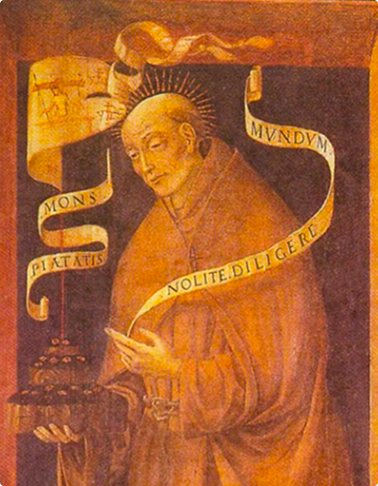
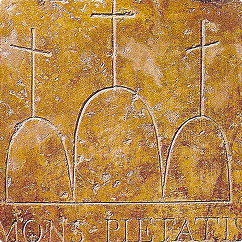
With the support of benefactors, bequests, and municipal funds, Bernardino da Feltre managed to raise enough money to get the project off the ground. A charter was established, staff were hired, and the institution began its operations. In the second half of the 15th century, an increasing number of pawnbroking institutions emerged in northern Italy. Later, the low-interest loan became the guiding principle of the Franciscan Order for the operation of the Monti di Pietà and was uniformly applied at all locations.
1515 – The Legality of an Interest-Bearing Loan
Experience showed that institutions strictly adhering to interest-free lending—relying solely on donations—were often unsustainable. Many were forced to close or to introduce minimal interest charges to ensure their continued operation.
The fierce theological, moral, and legal dispute with the Dominican monks over the charging of interest was finally settled by the decrees of the Fifth Lateran Council, which was convened by Julius II in 1512 and concluded by Pope Leo X in 1517. In his 1515 bull “Inter Multiplices,” Leo X reaffirmed the Church’s condemnation of usury but approved the legality of interest-bearing loans and endorsed the Monti’s now widespread practice of charging moderate interest, provided that it served solely to cover costs.
The Italian “Mons Pietatis” spread rapidly throughout Europe and took root particularly in Catholic countries and the Mediterranean region (France, Spain, Portugal, Prussia, the Netherlands, etc.), from where it spread throughout Central and South America, North Africa, the Philippines, Japan, Indonesia, and other countries.