UNESCO Intangible Cultural Heritage
An ambition: Several members of PIGNUS, notably the Montemadrid Foundation (Spain) and DICREP (Chile), have promoted and are working to promote an ambitious initiative: to have UNESCO recognize the traditional pawnbroking activity characteristic of our Association’s members as Intangible Cultural Heritage of Humanity.
Beginnings and a New Name
As a long-standing social institution, deeply embedded in people´s lives, pawnbroking has also generated specialized professions—such as valuation experts and pawnbroker managers—who may be regarded as early precursors of modern banking professionals and as first employees of the Universal Bank. These new professionals were able to understand the needs of citizens of every class and condition and not only those of the rich merchants and rulers of that time.
Long before conventional banks addressed the financial needs of the broader population, Mons Pietatis—as pawnbroking institutions were historically known—already fulfilled this role. Over time, they evolved into more sophisticated structures, including savings banks, combining access to credit with the promotion of household savings and small families´ surpluses.
Global expansion
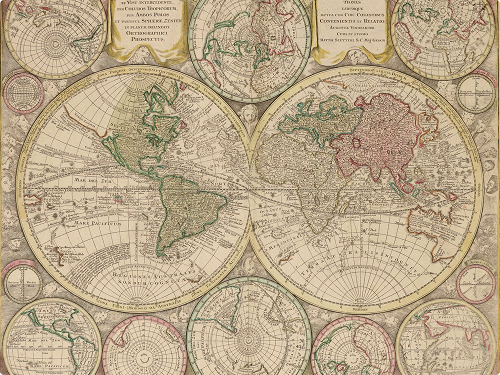
The expansion of European countries across other continents led to the worldwide diffusion of pawnbroking traditions. From Spain in the Americas and the Philippines, to France in North Africa and the Netherlands in Indonesia, this model spread globally, carrying with it its practices, professions, and cultural significance.
In the overseas territories, the model enjoyed the same success as in the mother country. In New Spain, in the Mexico City, the institution considered the oldest financial institution in the Americas was founded in 1775: the Sacro y Real Monte de Piedad de Ánimas, now known as the Nacional Monte de Piedad de México. In the rest of the continent, after the end of Spanish rule, the former Montes de Piedad mostly came under the control of public administrations, both local and state.
On the other side of the world, the Dutch brought the tradition of their Montes de Piedad with them to Indonesia, which later evolved into the creation, in 1901, of Pegadaian, now the largest institution among all PIGNUS members.
Chile’s “Tia Rica”
In Chile, the state-run pawnbroker is colloquially known as ‘Tia Rica’ (The Rich Aunt); in Paris it is called ‘Ma Tante’, in England ‘my uncle’, and in Vienna ‘Tante Dorothee’ – colloquial terms for a service that is almost like a family, where one can borrow money.
One of the entities representing this heritage in the Americas, the Chilean Government’s Pawnbroking Credit Directorate (DICREP), is leading this process of recognition by UNESCO. Few examples of social and cultural identification are as evident as in Chile. This institution is present in the lives of all the country’s citizens, not as a government agency or public financial institution, but as “la Tia Rica” (translation: the rich aunt), the popular nickname by which the institution is known and appreciated as the state’s best public service.
The Chilean Government’s Ministry of Culture, DICREP, and PIGNUS are working closely together to prepare the nomination of pawnbroking as a UNESCO Intangible Cultural Heritage of Humanity.